Full Slide Deck
A complete overview of the teaching material in one slide deck. It serves as a reference and as the source for workshop-specific decks.
 Google
- Markdown · soon
- PDF · soon
This teaching line examines how Models trained on extensive text corpora to process instructions and generate context-dependent language. operate inside Working environments that connect a language model with project context, files, tools and controlled actions. for computer-based, data-driven knowledge work. Its five modules connect model foundations with The deliberate formulation of instructions for a specific model, task and intended output., Maintaining explicit project knowledge and assembling the information a model needs for the current task., Organising extended work across tool use, intermediate results, permissions, feedback and human review., and Examining technical limits and social consequences, and defining responsibility and rules for use.. The shared Full Slide Deck, two Full Lecture Notes language versions and an ordered Video Playlist carry the material; each workshop selects from these sources and adapts them to a defined field, task and teaching language.
Digital Humanities Craft develops and maintains these public teaching materials. Commissioned workshops fund their ongoing revision, and reusable results return to the shared material. Sources and revision history are available on GitHub.
A complete overview of the teaching material in one slide deck. It serves as a reference and as the source for workshop-specific decks.
Google
The written-out version of the slides, with explanations and context for reading and reference.

An ordered video sequence from foundational to advanced topics, maintained and expanded over time.
The preparation slides cover Python, Visual Studio Code and an AI Harness, with a practical setup exercise. The slides are in English.
The Full Video Playlist contains the current maintained sequence. Opening a module that contains videos can load preview images from YouTube.
 What Is Context Engineering? Why It Matters for AI Agents
 Thinner Agents on a Smarter Substrate: The Ontology-based Semantic Layer
 Why Agentic Systems Need Ontologies
 Citation Needed: Provenance for LLM-Built Knowledge Graphs
 Wissens- und Projektmanagement mit Obsidian und Claude Code
 Grounded Vault: Quellenbasiertes Arbeiten mit AI Agents
 5 AI Agent Terms You Need to Know
 AI Model vs Agentic Harness: What Actually Drives AI
 MCP vs Skills: Which Is Right for Your AI Agent and LLMs?
 5 Best Practices for Building AI Agent Skills
 Agentic Engineering vs Software Engineering: Beyond Vibe Coding
 The Best Local Agentic Coding Workflow (Complete Guide)
 What I Use Instead
 Meet Pi: The Minimalist, Self-Modifying Coding Agent
 Building Pi, and What Makes Self-Modifying Software So Fascinating
 I Hated Every Coding Agent, So I Built My Own (Pi)
 Einführung in Promptotyping (Teil 1)
 Einführung in Promptotyping (Teil 2, Live Demo mit Claude Code)
 Anthropic's Dynamic Workflows: What Everyone Gets Wrong
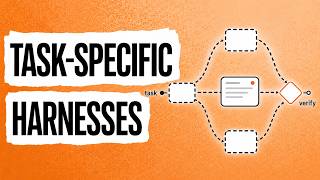 Claude Can Now Build Its Own Harness for Every Task
 Agentic AI and the Future of Software Development
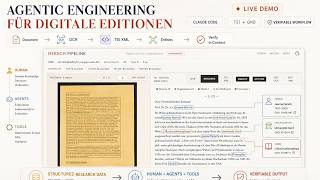 Agentic Engineering für digitale Editionen mit Claude Code, TEI und GND
 Agentic Engineering und digitale Edition mit Claude Code
 Research Mission Control: Eine Forschungsleitstelle mit mehreren KI-Agenten
 How to Use Multiple AI Agents in Your IDE
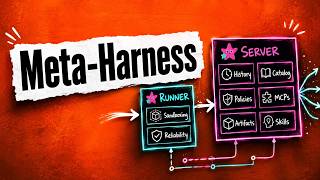 This Meta-Harness Changes How You Run AI Agents
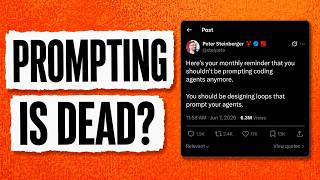 Loop Engineering: Why Everyone Is Talking About Agentic Loops
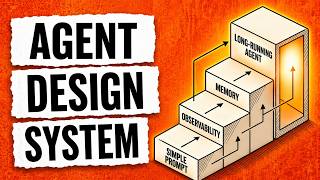 Stop Building AI Agents the Old Way
 Matrix 2025: Gefangen in der Kalifornischen Ideologie – scobel
 Douglas Rushkoff – das Mindset der Tech-Milliardäre | Sternstunde Philosophie | SRF Kultur
 Die geheime Steuerung, die niemand wählte – scobel im Gespräch: Mit Anna-Verena Nosthoff
 Kybernetik kurz erklärt | 5 Fragen an Anna-Verena Nosthoff
 What the hell happened with AGI timelines in 2026?
 Where AGI timelines go wrong | Toby Ord, Oxford University
 Can $500 Billion Win the AI Race? | Anton Leicht
 Google