Complete material
Full Slide Deck
A complete overview of the teaching material in one slide deck. It serves as a reference and as the source for workshop-specific decks.
 Google
- Markdown · soon
- PDF · soon
This teaching line examines how Models trained on extensive text corpora to process instructions and generate context-dependent language. operate inside Working environments that connect a language model with project context, files, tools and controlled actions. for computer-based, data-driven knowledge work. Its five modules connect model foundations with The deliberate formulation of instructions for a specific model, task and intended output., Maintaining explicit project knowledge and assembling the information a model needs for the current task., Organising extended work across tool use, intermediate results, permissions, feedback and human review., and Examining technical limits and social consequences, and defining responsibility and rules for use.. The shared Full Slide Deck, two Full Lecture Notes language versions and an ordered Video Playlist carry the material; each workshop selects from these sources and adapts them to a defined field, task and teaching language.
The preparation tutorial shows you how to set up everything you need to take part in a workshop.
Complete material
A complete overview of the teaching material in one slide deck. It serves as a reference and as the source for workshop-specific decks.
Google
Complete material
The written-out version of the slides, with explanations and context for reading and reference.

YouTube
An ordered video sequence from foundational to advanced topics, maintained and expanded over time.
Each workshop is a domain-specific derivation of the Full Slide Deck. It selects and rearranges shared modules, then adds the cases, exercises and sequence required for its event. Some explanations recur deliberately so that every workshop remains usable on its own.
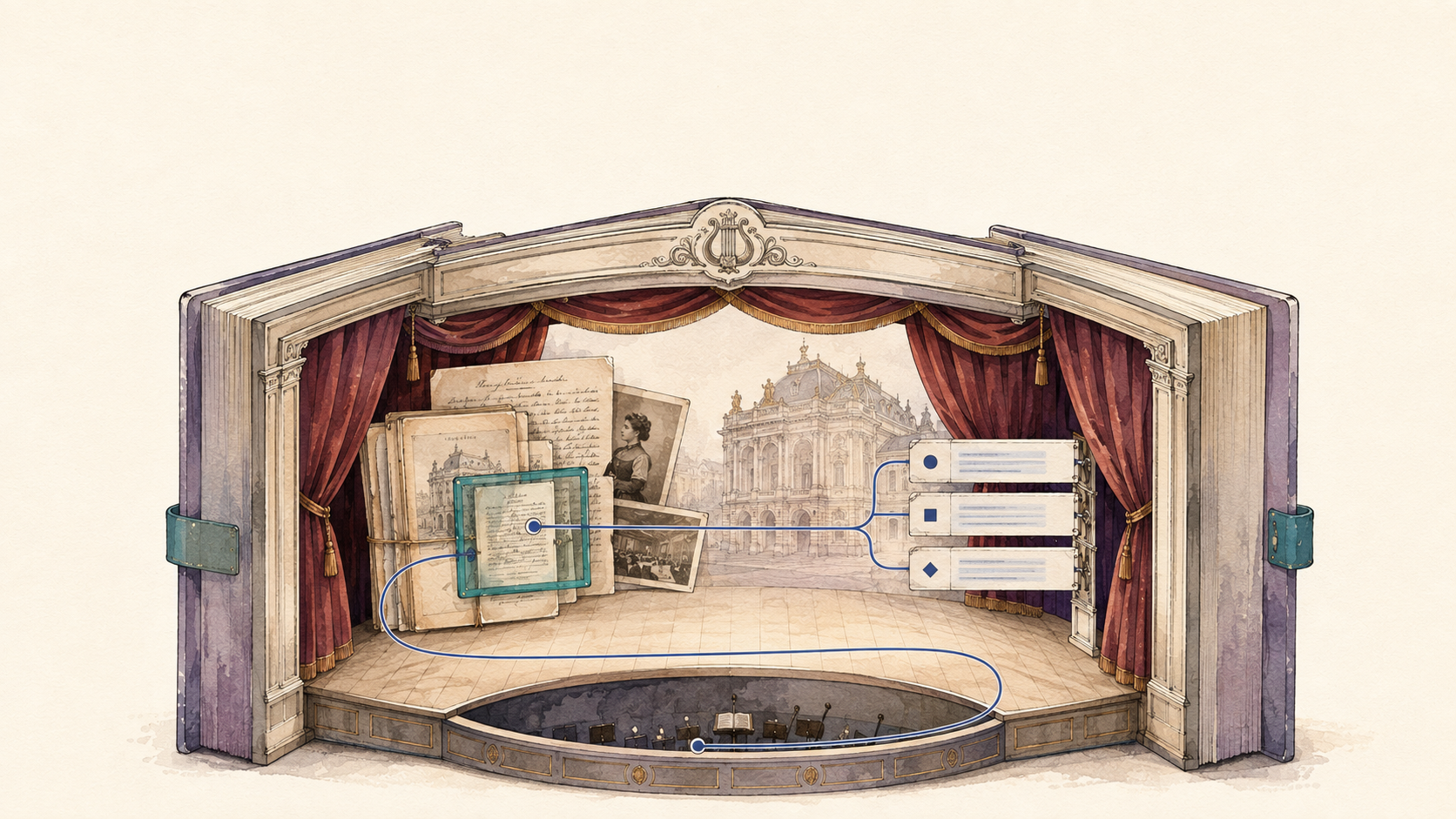
Four connected sessions follow a complete research data workflow. Stefan Zweig Digital explains the route from estate material to a research platform. The M³GIM hands-on units use large language models for transcription and structured extraction, then turn the checked data into a small digital research application through Promptotyping.
Slide Deck and Lecture Notes in preparation
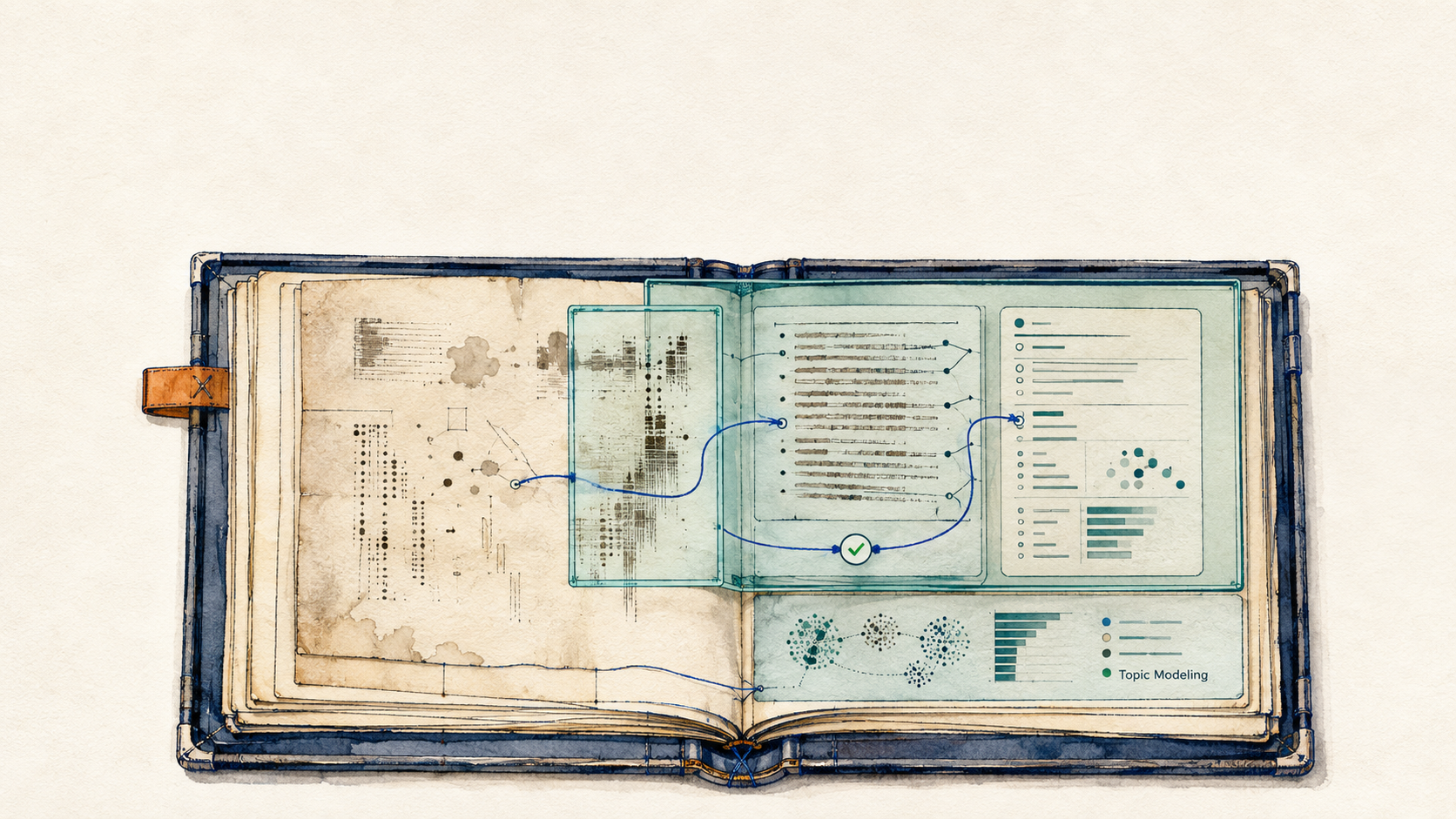
The single-day specialisation on research data workflows and digital scholarly editions, with case material from two edition projects at the Zentralbibliothek Zürich and the Literaturarchiv Salzburg. Prompt engineering is the one module with a participant exercise of its own, and the two hands-on units run from the transcription of a difficult manuscript page to structured information against an explicit schema.
Slide Deck and Lecture Notes in preparation
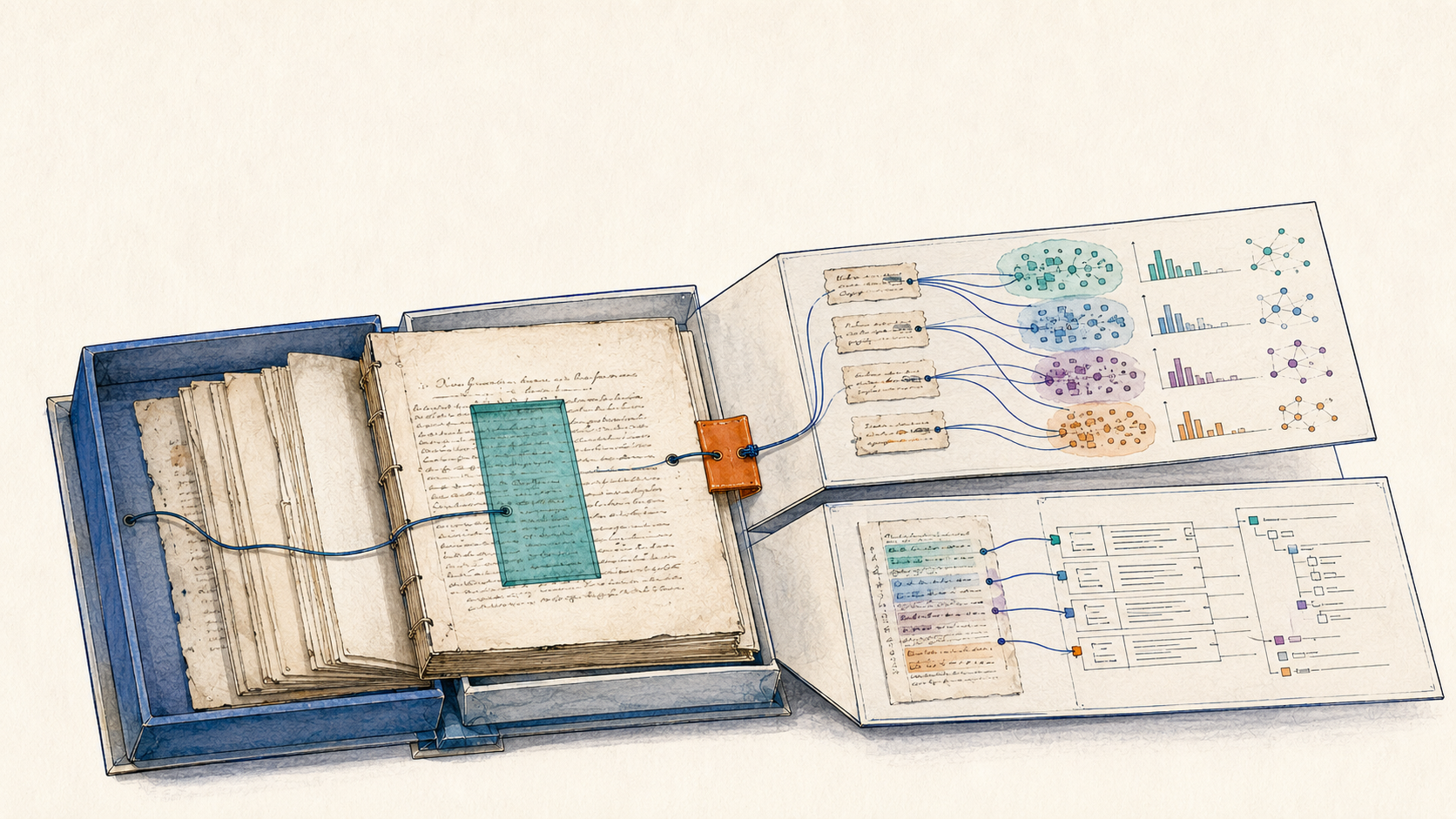
Two days for an editions research centre, with TEI modelling, Context Engineering and the knowledge base as steering instruments on the first day and agentic coding as the central method. The second day is a two-part Promptotyping workshop on the participants' own material, ending in a plenary presentation of the prototypes.
Slide Deck and Lecture Notes in preparation
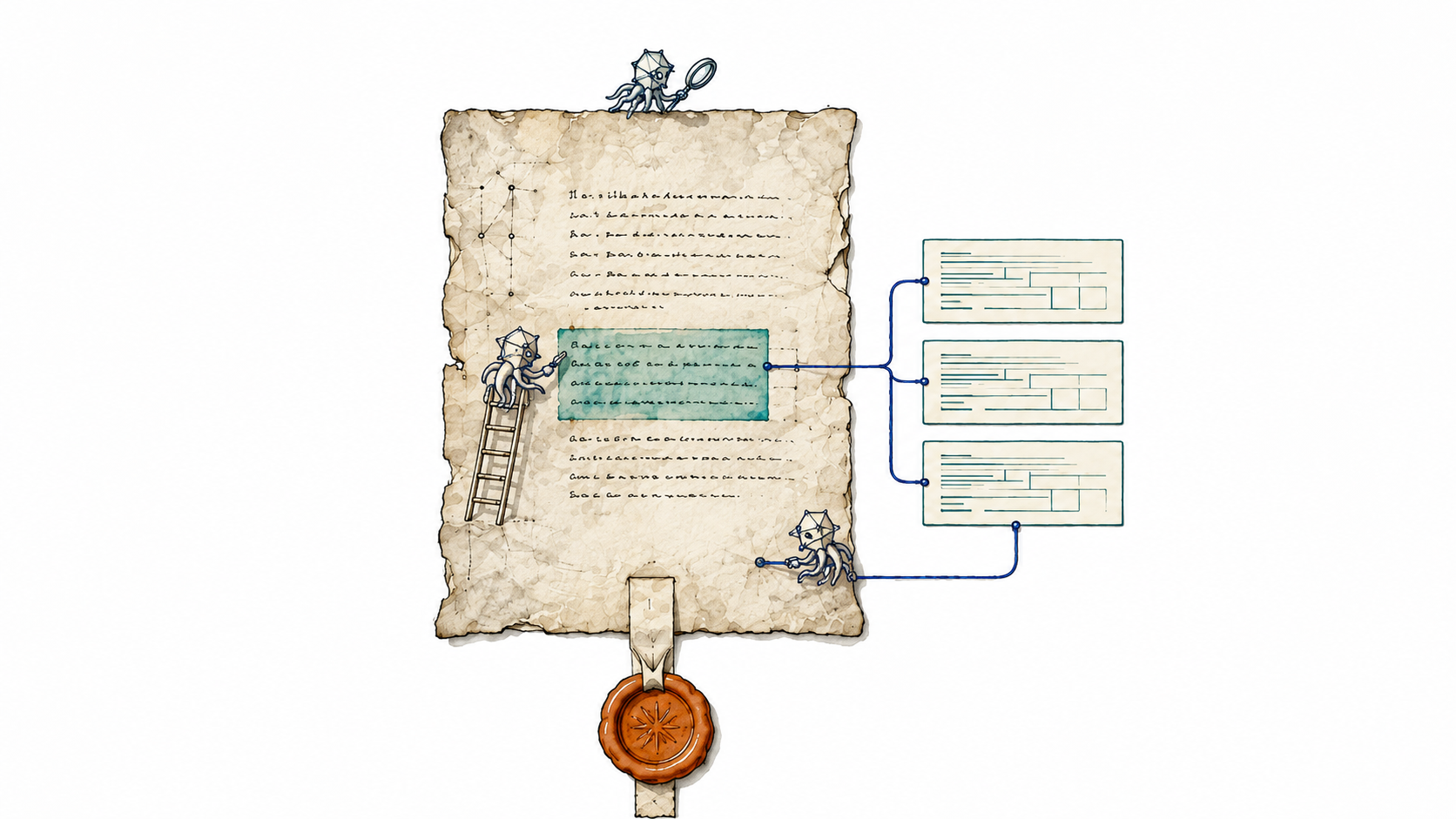
One day worked inside a coding agent throughout, opening on language model and agent fundamentals. Participants build structured project knowledge and then run the arc from handwriting recognition on medieval charters through TEI markup and an index of persons and organisations to a small static edition, checking a prepared model transcription against the facsimile.
Slide Deck and Lecture Notes in preparation
Half day · hybrid
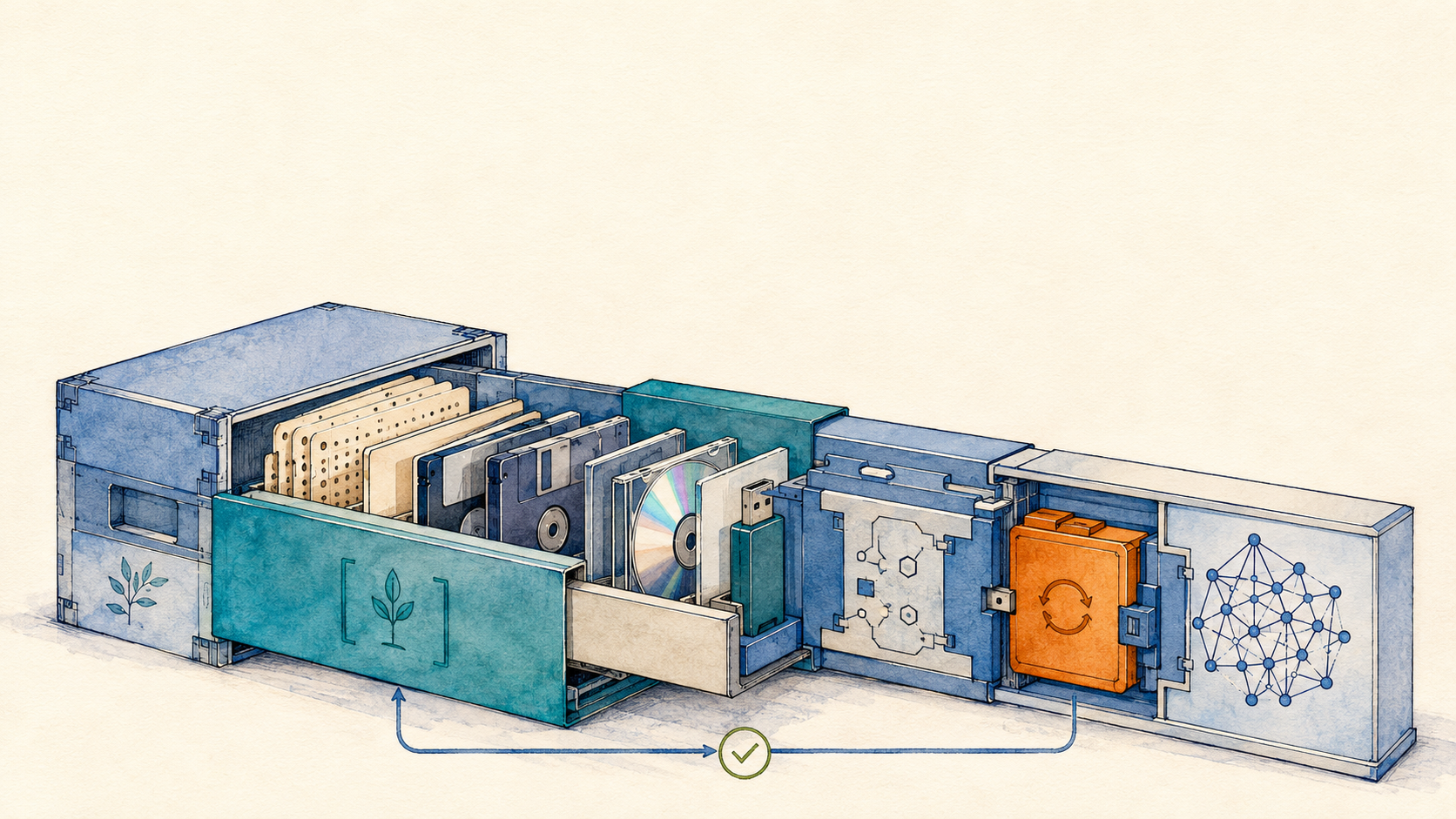
A hybrid half day on agent-supported preparation and migration of research data and on the semi-automated maintenance of interfaces and endpoints. Three existing project pipelines carry the case material, and the hands-on has participants build a small knowledge base for their own data and commission a bounded task from an agent.
Slide Deck and Lecture Notes in preparation
3 × 2 hours
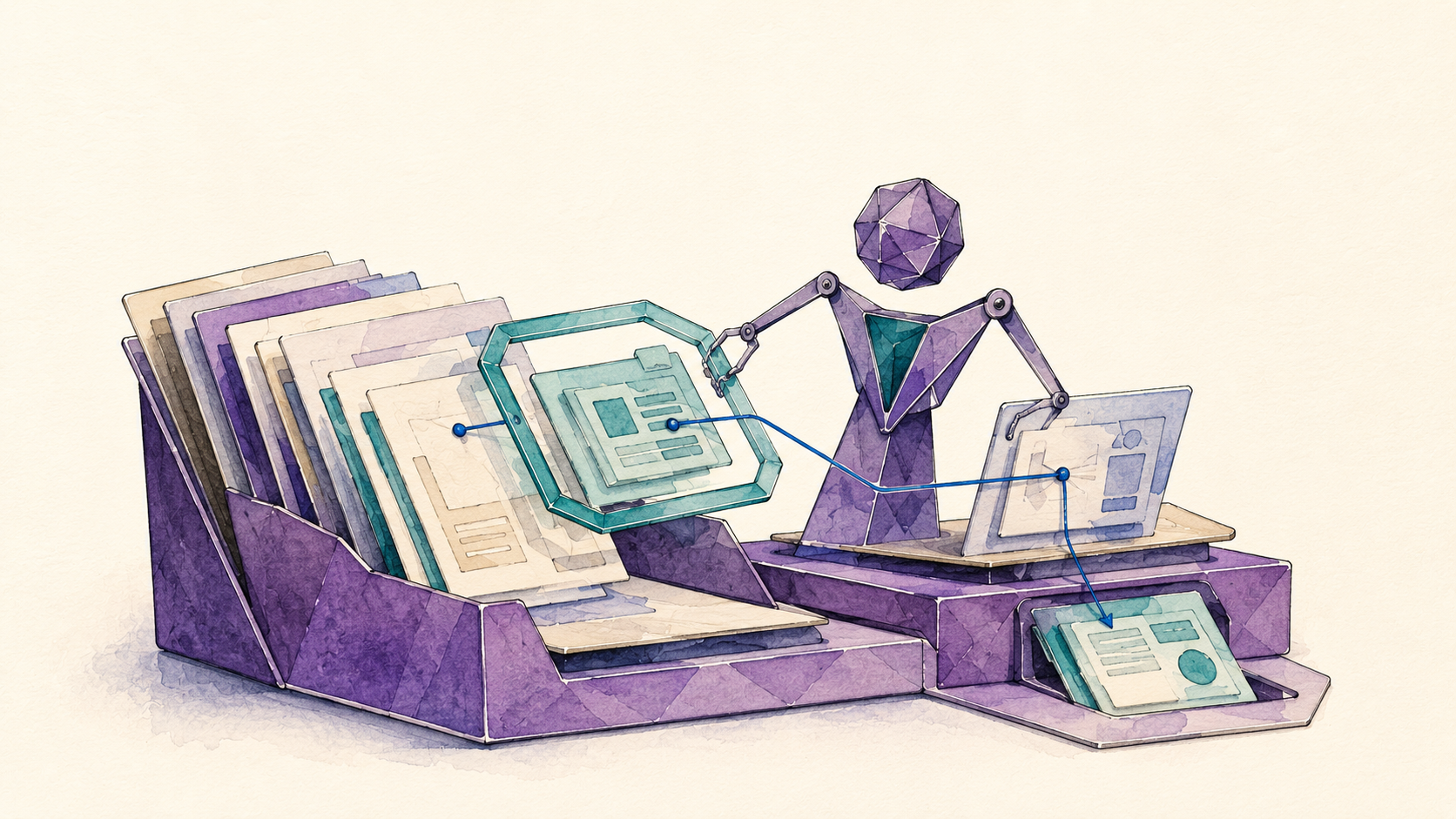
Three compact units for knowledge work beyond academia, with the emphasis on steering agentic work. The first unit covers setup, terminal and permissions, the second builds a knowledge base and defines human control points for document and application work, and the third moves into light coding and small prototypes on a synthetic institutional scenario.
Slide Deck and Lecture Notes in preparation
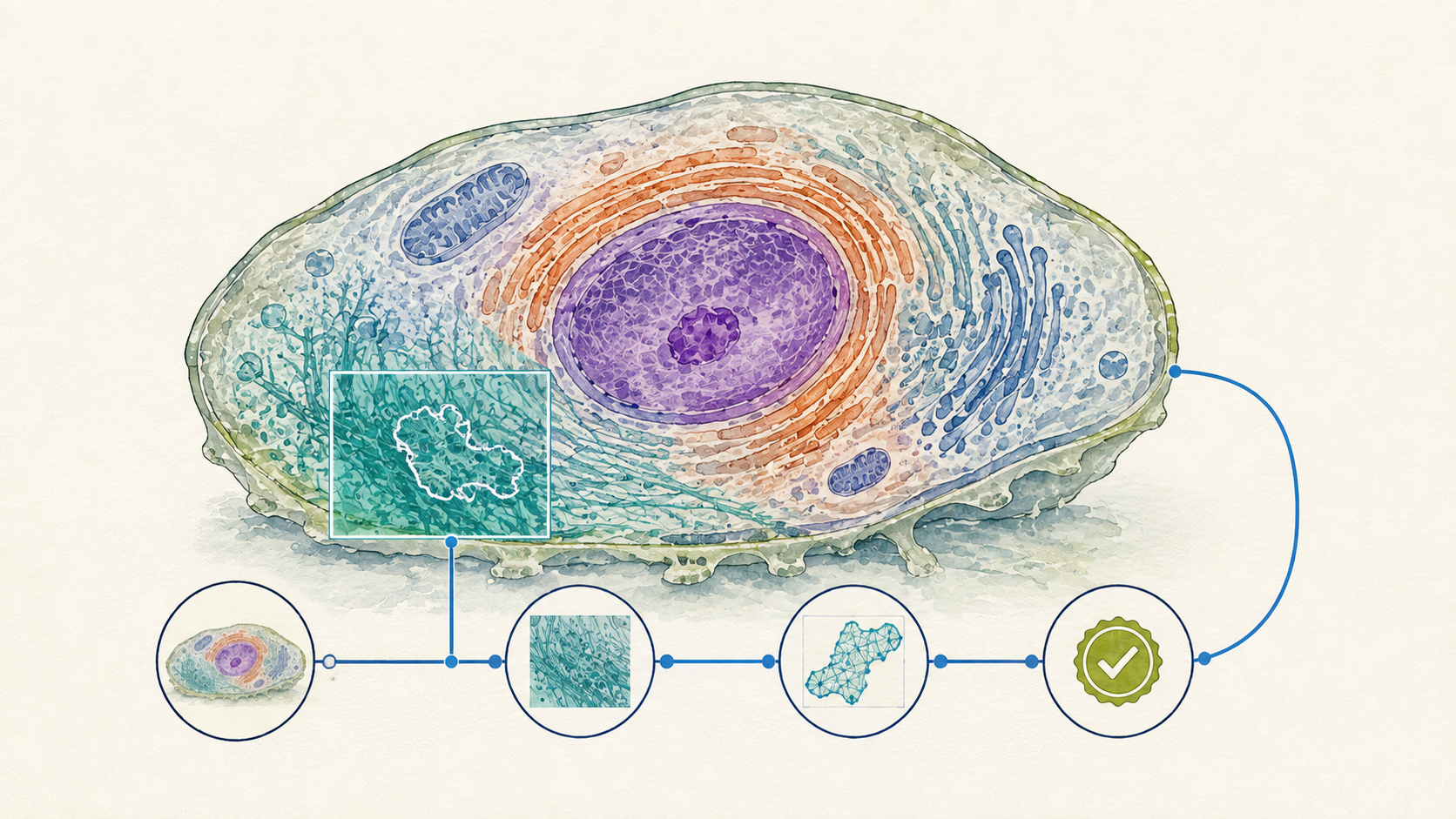
A five-day block week for staff without a coding background, and the fullest derivation of the material among the registered instances. Every module is taught in full, with an exercise each day and one application project from the participants' own working area running through the week, from the chat interface through the terminal to an agent harness with local models.
Slide Deck and Lecture Notes in preparation
Before a workshop
The guide connects browser access, a local workspace and one AI Harness through observable checks. It also holds the four compact subject introductions that we will develop from the existing slides.
The Full Video Playlist contains the current maintained sequence. Opening a module that contains videos can load preview images from YouTube.
 What Is Context Engineering? Why It Matters for AI Agents
 Thinner Agents on a Smarter Substrate: The Ontology-based Semantic Layer
 Why Agentic Systems Need Ontologies
 Citation Needed: Provenance for LLM-Built Knowledge Graphs
 Wissens- und Projektmanagement mit Obsidian und Claude Code
 Grounded Vault: Quellenbasiertes Arbeiten mit AI Agents
 5 AI Agent Terms You Need to Know
 AI Model vs Agentic Harness: What Actually Drives AI
 MCP vs Skills: Which Is Right for Your AI Agent and LLMs?
 5 Best Practices for Building AI Agent Skills
 Agentic Engineering vs Software Engineering: Beyond Vibe Coding
 The Best Local Agentic Coding Workflow (Complete Guide)
 What I Use Instead
 Meet Pi: The Minimalist, Self-Modifying Coding Agent
 Building Pi, and What Makes Self-Modifying Software So Fascinating
 I Hated Every Coding Agent, So I Built My Own (Pi)
 Einführung in Promptotyping (Teil 1)
 Einführung in Promptotyping (Teil 2, Live Demo mit Claude Code)
 Anthropic's Dynamic Workflows: What Everyone Gets Wrong
 Claude Can Now Build Its Own Harness for Every Task
 Agentic AI and the Future of Software Development
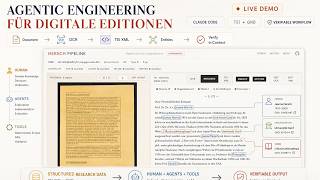 Agentic Engineering für digitale Editionen mit Claude Code, TEI und GND
 Agentic Engineering und digitale Edition mit Claude Code
 Research Mission Control: Eine Forschungsleitstelle mit mehreren KI-Agenten
 How to Use Multiple AI Agents in Your IDE
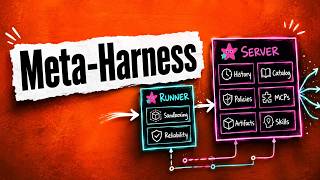 This Meta-Harness Changes How You Run AI Agents
 Loop Engineering: Why Everyone Is Talking About Agentic Loops
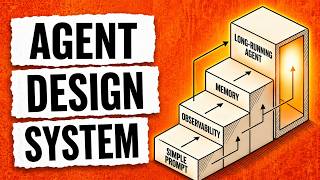 Stop Building AI Agents the Old Way
 Matrix 2025: Gefangen in der Kalifornischen Ideologie – scobel
 Douglas Rushkoff – das Mindset der Tech-Milliardäre | Sternstunde Philosophie | SRF Kultur
 Die geheime Steuerung, die niemand wählte – scobel im Gespräch: Mit Anna-Verena Nosthoff
 Kybernetik kurz erklärt | 5 Fragen an Anna-Verena Nosthoff
 What the hell happened with AGI timelines in 2026?
 Where AGI timelines go wrong | Toby Ord, Oxford University
 Can $500 Billion Win the AI Race? | Anton Leicht
 Google